Forty and Forged: Why the Barbell Beats Every Bottle on the Shelf
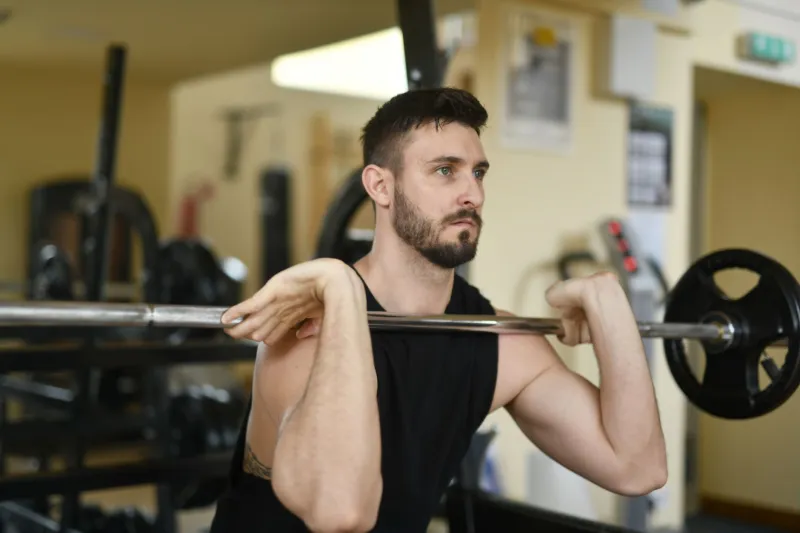
Scroll through any fitness feed long enough and you'll start to believe that turning 40 is basically a biological disaster. Testosterone tanks. Muscle evaporates. Recovery grinds to a halt. And conveniently, there's a supplement stack — usually priced somewhere between a car payment and a mortgage — ready to save you.
Here's what those ads don't want you to know: the men who are genuinely strong, lean, and capable well into their 40s and beyond didn't get there by chasing the next breakthrough formula. They got there by showing up to the bar — the barbell, that is — week after week, year after year, and letting the process do the work.
Let's break down exactly how that works and why compound lifting paired with progressive overload is the most evidence-backed strategy a man over 40 has in his corner.
What Actually Happens to Your Muscles After 40
The clinical term is sarcopenia — the gradual loss of skeletal muscle mass that begins somewhere in your 30s and picks up pace as the decades roll on. Research published in the Journal of Cachexia, Sarcopenia and Muscle estimates that men can lose anywhere from 3 to 8 percent of their muscle mass per decade after 30, with that rate accelerating after 60.
But here's the part the supplement commercials leave out: sarcopenia is not inevitable in the way they imply. It's largely a disease of inactivity. Studies consistently show that resistance training — specifically the kind that loads the body with meaningful, progressive weight — can not only slow muscle loss but actively reverse it in men well into their 60s and 70s.
Your hormonal environment does shift. Testosterone levels decline gradually, typically around 1 percent per year after age 30. Growth hormone output drops too. But neither of those changes eliminates your body's ability to respond to mechanical tension — which is precisely what a heavy squat, deadlift, or bench press delivers. The signaling pathways that drive muscle protein synthesis remain responsive to load. You just have to give them a reason to fire.
Why Compound Lifts Are Non-Negotiable
If you're over 40 and still organizing your workouts around isolation machines and cable flyes, it's time to reconsider your priorities. Compound movements — squats, deadlifts, bench press, overhead press, barbell rows — recruit multiple muscle groups simultaneously and trigger a hormonal and neuromuscular response that isolation work simply cannot match.
Think about it this way. A leg extension trains your quads. A squat trains your quads, hamstrings, glutes, adductors, spinal erectors, and core — all while demanding coordination, balance, and full-body tension. The metabolic and anabolic stimulus from one heavy set of squats dwarfs what you'd get from five sets of leg curls.
For men over 40, this efficiency matters even more. Recovery capacity changes with age. You can't always handle the sheer volume a 22-year-old can absorb. Compound lifts let you get maximum stimulus from fewer working sets, leaving more in the tank for recovery and real life.
The big five should anchor your programming:
- Squat — the king of lower body development
- Deadlift — total posterior chain and full-body strength
- Bench Press — upper body pushing strength and chest thickness
- Overhead Press — shoulder health and pressing power
- Barbell Row — back thickness and postural balance against all that pressing
Build your week around these movements. Everything else is accessory work — useful, but secondary.
Progressive Overload: The Principle That Never Gets Old
Progresssive overload is simple in concept and demanding in practice. It means consistently making your training harder over time — adding weight to the bar, increasing reps, improving form under load, or reducing rest periods. Your muscles grow in response to a challenge that exceeds what they're already adapted to. When the challenge stays the same, growth stalls.
For men in their 40s, the key is patience with the rate of progression. You're not going to add 10 pounds to your squat every week the way you might have at 22. That's fine. A 5-pound increase every two to three weeks across a full year still adds up to 80 to 130 pounds on the bar. That's not small — that's transformative.
Keep a training log. It doesn't have to be complicated. Note the weight, sets, and reps for every main lift. Review it monthly. If the numbers are moving — even slowly — you're on the right track. If they've stalled, something in your program, nutrition, or recovery needs attention.
Recovery Is Part of the Program
Here's where a lot of guys over 40 run into trouble. They train hard but treat recovery as optional. Sleep gets sacrificed. Nutrition stays sloppy. Stress piles up. And then they wonder why progress has stalled or why they're constantly banged up.
Muscle isn't built in the gym. It's built in the hours after you leave. That means:
- Seven to nine hours of sleep — non-negotiable for hormone regulation and tissue repair
- Adequate protein — aim for 0.7 to 1 gram per pound of bodyweight daily from whole food sources like eggs, beef, chicken, and fish
- Stress management — chronic cortisol elevation actively works against muscle building and fat loss
- Mobility work — 10 minutes of targeted stretching and soft tissue work keeps joints healthy and training sustainable
This isn't glamorous advice. It won't sell supplements. But it's what actually moves the needle for men who want to be strong and functional at 50, 60, and beyond.
Skip the Shortcut Mindset
The supplement industry is a multi-billion dollar machine built largely on exploiting insecurity and impatience. Most products marketed to men over 40 offer marginal benefits at best and empty wallets at worst. Creatine monohydrate is genuinely useful and dirt cheap. Vitamin D and magnesium matter if you're deficient. Beyond that, your money is almost always better spent on quality food.
The men who carry real, functional muscle into their 40s, 50s, and beyond share one trait more than any other: consistency. They didn't find a shortcut. They decided that strength was a long-term project worth committing to, and they built their life around protecting that commitment.
That's the compound effect in action — not the one in a pill bottle, but the one that comes from stacking disciplined training sessions week after week until the results are undeniable.
The bar doesn't care how old you are. It just wants to know if you're showing up.