Mirror Muscles vs. Real Strength: What Kind of Man Does Your Training Actually Build?

Let's be honest for a second. When most guys design their training, the mirror plays a bigger role than they'd like to admit. There's nothing wrong with wanting to look good—that's a legitimate goal. But somewhere along the way, a lot of us built a body that photographs well and functions poorly. We optimized for appearance and quietly forgot to optimize for capability.
This isn't just an aesthetic debate. It's a question about what you actually want from your body—and whether your training is giving it to you.
The Vanity Trap
The fitness industry is built around the mirror. Chest days, arm days, shoulder days—these split routines exist largely because they produce visible results in the muscles people see when they look at themselves. And they work, to a degree. You'll build mass. You'll look more muscular in a fitted shirt.
But here's what they don't build: the ability to transfer force efficiently through your entire body. The stability to control heavy, awkward loads. The hip and posterior chain strength to actually use all that upper body in a real-world context. The grip endurance to hold on when it matters.
Vanity training tends to produce bodies that look strong from the front. Functional training produces bodies that are strong from every angle and in every position life throws at you.
What Real-World Strength Actually Looks Like
Think about the moments in life that genuinely require physical capability. Helping a friend move furniture. Carrying luggage through an airport after a red-eye. Hiking a mountain trail with a loaded pack. Catching a fall. Lifting a car jack. Keeping up with your kids without your lower back screaming at you by noon.
None of those situations care about your bicep peak. They care about hip hinge mechanics, grip strength, core stability under load, and the ability to generate force through a full range of motion. They care about what your body can actually do, not how it looks standing still.
Functional strength isn't a buzzword. It's the gap between looking capable and being capable.
The Movements That Actually Matter
This isn't an argument against the bench press or the curl. It's an argument for building your training around movements that develop systemic, transferable strength—and filling in aesthetics from there.
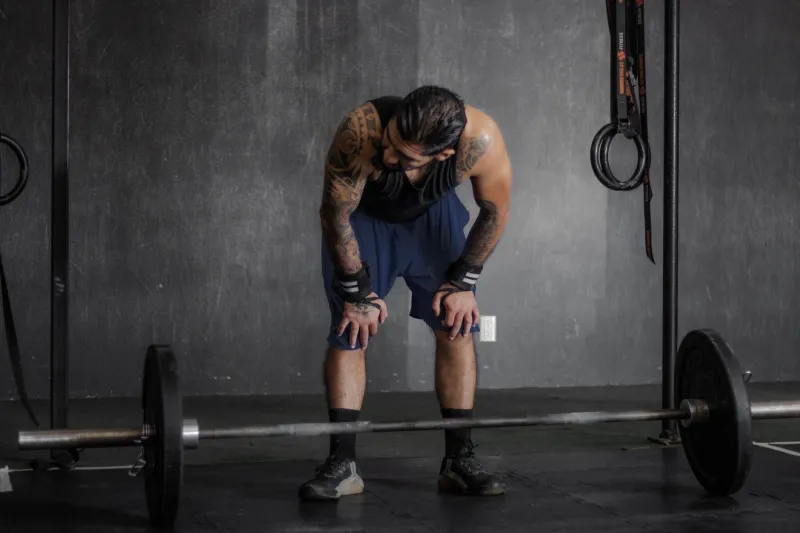
The deadlift is the most honest strength test there is. Pick something heavy up off the floor. That's it. Nothing in your daily life will demand more from your posterior chain, your grip, and your ability to brace under load. If you're skipping deadlifts because they're hard, you're skipping the thing that would make everything else easier.
The loaded carry is criminally underused. Farmer's carries, suitcase carries, front rack carries—these build the kind of full-body stability and grip endurance that make you genuinely useful when physical demands show up unexpectedly. They're also brutal in the best possible way.
The Turkish get-up sounds like a yoga class but trains something most men have completely neglected: the ability to get up from the floor under load with control and coordination. It's a full-body stability exercise that exposes every weak link in your kinetic chain.
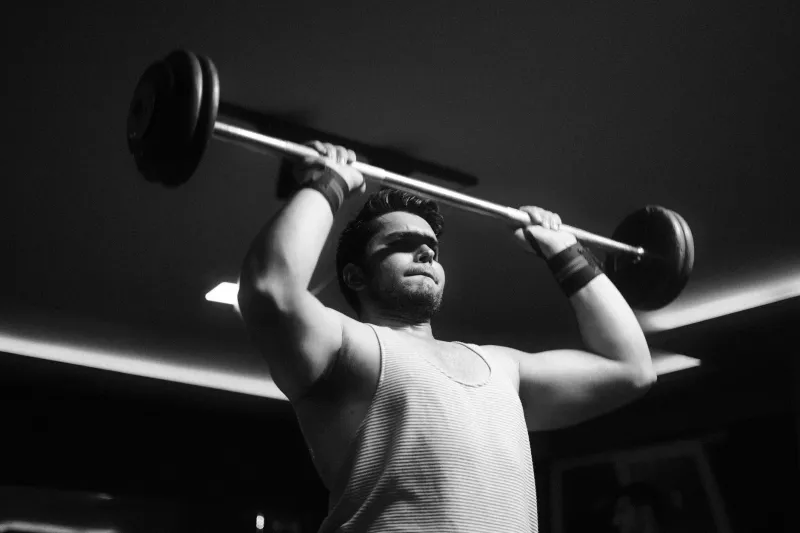
The overhead press beats the machine shoulder press in every real-world category. Pressing something directly overhead requires core stability, shoulder mobility, and full-body tension in a way that seated machines never replicate.
The pull-up remains the single best test of relative upper-body strength. Not the lat pulldown, not the assisted machine—the pull-up. Your bodyweight, your grip, your lats and biceps working together to move you through space.
The Aesthetics Aren't Actually in Conflict
Here's the thing: if you build your training around these foundational movement patterns and progressively load them over time, you will look good. Maybe not the same kind of inflated-upper-body look that comes from pure hypertrophy work—but the kind of physical presence that signals actual capability. Thick back, powerful hips, dense forearms, a midsection that works rather than just sitting there.
The men who built reputations as legitimately strong—think old-school strongmen, military operators, elite laborers—rarely looked like bodybuilders. They looked like they could do things. That's a different kind of impressive, and in most real-world contexts, it's a more useful one.
An Honest Audit
Here's a quick gut-check for where your training actually sits:
- Can you deadlift your bodyweight times two? That's a legitimate minimum for functional strength.
- Can you carry half your bodyweight in each hand for 60 seconds? Farmer's carry test.
- Can you do ten strict pull-ups? No kipping, no momentum.
- Can you overhead press your bodyweight? Once, strictly.
If those numbers feel humbling, that's useful information. Not a judgment—just data.
The goal isn't to abandon aesthetics. The goal is to build a body that earns its appearance. One that's as capable as it looks. Because when something actually requires physical strength—when the situation is real and the stakes are real—nobody cares about your selfie angle.