Doing Nothing Is Costing You Gains: The Smarter Way to Spend Your Off Days

You crushed a brutal leg session on Thursday. Friday rolls around and your quads feel like overcooked brisket. So you park yourself on the couch, cancel your plans to do literally anything physical, and call it recovery.
Makes sense, right? Rest means rest.
Except here's the thing — that logic is probably leaving real gains on the table. The idea that total inactivity is the gold standard for recovery is one of the most stubborn myths in the fitness world, and it's worth challenging head-on.
The Problem With Doing Absolutely Nothing
When you train hard, you create micro-tears in muscle tissue, build up metabolic waste products like lactate, and spike inflammation. Your body needs time to repair all of that — no argument there. But the assumption that lying still is the fastest route to repair? That's where things get shaky.
Blood flow is your body's delivery system. It brings oxygen and nutrients to damaged muscle tissue and hauls away the waste that's causing soreness. When you're completely sedentary, that system slows to a crawl. You're essentially cutting off supply lines to the construction site.
Research published in the Journal of Strength and Conditioning Research has consistently shown that light movement on recovery days — think easy cycling, walking, or bodyweight work — increases blood circulation to sore muscles, reduces delayed onset muscle soreness (DOMS), and speeds up the overall repair process compared to complete rest.
On top of the physical side, there's the mental angle. A lot of guys who train seriously know that full rest days can mess with your head. The routine breaks, the energy has nowhere to go, and by Sunday afternoon you're either restless, irritable, or both. That's not a character flaw — it's your nervous system reacting to a sudden drop in physical output.
Active Recovery Isn't Just a Buzzword
Active recovery means low-intensity movement done with intention. It's not a sneak workout. It's not an excuse to go half-effort on a real training day. It's deliberate, low-stakes movement designed to support the repair process without adding meaningful stress to your system.
The key metric here is intensity. You want to stay well below 60% of your max heart rate. Think a 30-minute walk with the dog, a casual bike ride around the neighborhood, or a light swim. These aren't conditioning sessions. They're circulation boosters with a side of mental reset.
Here's a simple framework to think about your week:
- Hard training days: Push intensity, progressive overload, full effort
- Active recovery days: Move for 20–45 minutes at conversational pace — you should be able to hold a full sentence without gasping
- True rest days: These still exist, but they're earned and strategic, not the default setting for every non-training day
For most guys training 3–5 days a week, one genuine full-rest day is probably enough. The rest of your "off" time is better spent in active recovery mode.
What Active Recovery Actually Looks Like in Practice
Let's get practical. Here are some solid options that fit into real life without requiring a second gym bag or a yoga mat you'll never use:
Walking: Underrated, zero barrier to entry, and legitimately effective. A brisk 30–45 minute walk gets blood moving, supports joint health, and gives your mind a break from screens. Bonus: morning walks in sunlight help regulate cortisol and improve sleep quality — both of which directly impact recovery.
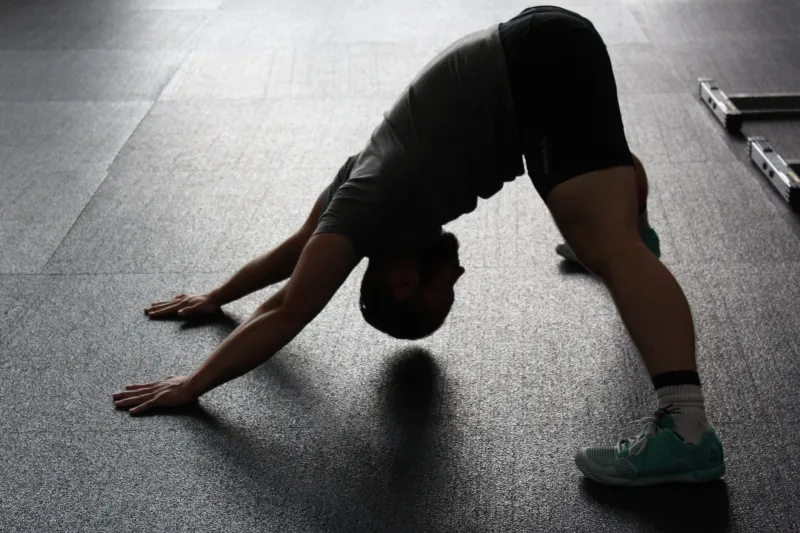
Mobility work: This is the one most guys skip and then regret at 40. A 20-minute session targeting your hips, thoracic spine, and ankles on off days pays dividends in the long run. You don't need a dedicated class. Pull up a YouTube video or work through a simple flow — hip 90/90s, thoracic rotations, deep squat holds. Your squat depth will thank you in three months.
Light sled work or loaded carries: If you have gym access, a few easy sled pushes at a fraction of your working weight or some farmer's carry laps are almost therapeutic for recovery. The movement pattern is low-impact, and the blood flow to your legs and upper back is excellent.
Swimming or cycling: Both are joint-friendly and easy to keep at a low intensity. Even 20 minutes of easy laps or a flat bike ride checks the active recovery box without taxing your system.
Foam rolling and soft tissue work: Not a replacement for movement, but a solid complement. Spend 10–15 minutes rolling out your quads, hamstrings, lats, and calves before or after your active recovery session.
Programming It Into Your Week
The easiest way to make active recovery stick is to stop treating off days as unscheduled voids and start treating them like sessions with a different goal.
Here's a sample week for a guy training four days:
- Monday: Upper body strength
- Tuesday: Active recovery (30-min walk + 15-min mobility)
- Wednesday: Lower body strength
- Thursday: Active recovery (easy bike or swim)
- Friday: Full body or accessory work
- Saturday: Active recovery (outdoor activity — hike, pickup basketball, yard work)
- Sunday: True rest
Notice Sunday is still in there. Full rest isn't the enemy — it's just not the default. One day of genuine downtime gives your nervous system a real reset. The other "off" days keep the engine warm.
The Mental Edge You're Missing
Here's something nobody talks about enough: active recovery keeps your identity intact. Guys who train seriously tie a significant part of their discipline and self-image to their routine. When that routine goes dark for a full day — or two — there's a subtle psychological cost. Momentum stalls. Motivation dips. The longer the gap, the harder the return.
Active recovery days keep you in the game mentally. You're still doing something. You're still making choices that align with who you're building yourself to be. That continuity matters more than most people give it credit for.
Strength isn't just a physical state — it's a habit of action. And habits don't take days off.
The Bottom Line
Rest days aren't going anywhere. You still need them. But the version of rest that actually serves your gains looks a lot more like intentional, low-intensity movement than a Netflix marathon on the couch.
Flip the script on your off days. Walk more. Move your joints through their full range. Keep the blood flowing and the mindset sharp. Your muscles will repair faster, your soreness will clear sooner, and come Monday when you're back under the bar, you'll feel like a different animal.
That's not working harder. That's working smarter — which is exactly what strong chaps do.