Strong and Supple: The No-BS Mobility Routine Built for Guys Who Lift Heavy
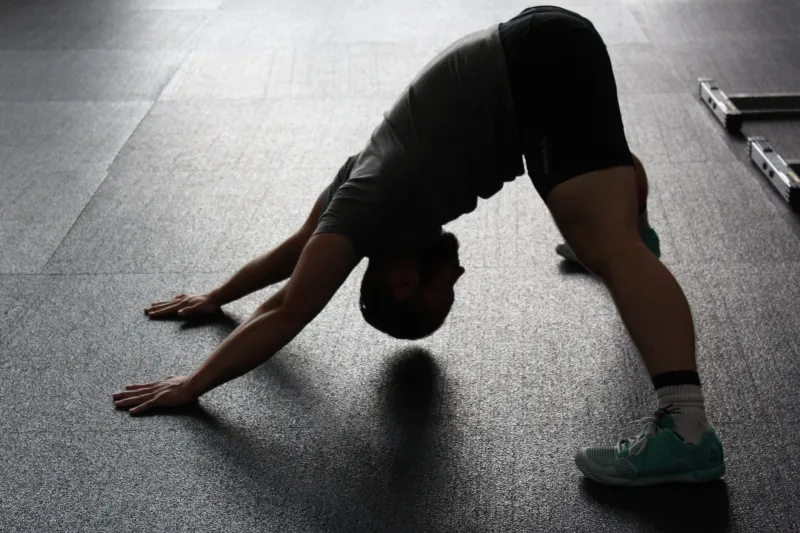
Somewhere along the way, stretching got a reputation problem. It got lumped in with yoga retreats and wellness influencers, and a lot of serious lifters quietly decided it wasn't for them. Real training was about load, volume, and intensity — not sitting on a mat doing hip circles.
That attitude has a body count. Not literal, obviously, but a long, undignified trail of torn hip flexors, locked-up thoracic spines, and blown-out shoulders that could have been avoided.
Mobility work isn't the opposite of strength. It's the foundation of it. The guys who are still squatting deep and pressing overhead at 50 didn't get there by ignoring how their bodies move. They treated movement quality like a training variable — because it is one.
Let's fix the record and build something actually useful.
What Mobility Actually Means (And Why It's Not Just Stretching)
First, a quick distinction that matters. Flexibility is passive — it's how far a muscle can lengthen when you're not controlling it. Mobility is active — it's the range of motion you can actually use and control under load. A guy can be flexible enough to touch his toes but still have terrible hip mobility in a squat. A gymnast has both. A strong, functional lifter needs mobility more than flexibility.
This matters because the goal isn't to become a contortionist. The goal is to move through the ranges your training demands, without compensation patterns that eventually break something.
Deep squat? You need ankle dorsiflexion and hip internal rotation. Overhead press? You need thoracic extension and shoulder external rotation. Deadlift with a flat back? You need hip hinge mechanics and hamstring length that doesn't pull your pelvis into posterior tilt before the bar leaves the floor.
None of that is soft. All of it is necessary.
The Real Cost of Skipping It
Here's what happens when you ignore mobility long enough. Your body compensates. It finds a way to get the movement done using whatever range of motion is available, borrowing from joints that shouldn't be taking the load.
Squat with locked ankles long enough and your knees cave inward. Your lower back rounds. The load shifts somewhere it wasn't designed to handle. You feel fine — until you don't.
The insidious part is that the injury usually doesn't happen where the restriction is. It happens downstream. The shoulder that blows out during a bench press is often the victim of a thoracic spine that stopped rotating six months ago. The knee that goes during a lunge is often the casualty of a hip that couldn't do its job.
Mobility work is injury prevention that actually works, because it addresses the root cause instead of slapping a support sleeve on the symptom.
The Routine: Four Areas, Twenty Minutes, Done
This isn't a yoga class. This is a targeted, efficient mobility practice built around the movement patterns that matter most for lifters. Do it after training or on recovery days. It takes about 20 minutes when you're not dragging your feet.
1. Hip Complex (7 Minutes)
The hips are ground zero for most lifting restrictions. Tight hip flexors from sitting, limited internal rotation, poor glute activation — it all lives here.
90/90 Hip Stretch — Sit on the floor with both knees bent at 90 degrees, one in front, one to the side. Sit tall and lean gently over the front shin. Hold 60 seconds per side. Two rounds.
Hip CARs (Controlled Articular Rotations) — Standing on one leg, draw slow, deliberate circles with the raised knee, moving through as much range as you can control. Five rotations each direction, each side. This is active mobility work — you're building control, not just opening up.
Deep Squat Hold with Elbows on Knees — Drop into a full squat, press your elbows into your inner knees to open the hips, and hold for 60–90 seconds. If your heels are coming up, put a 10-pound plate under each heel until your ankle mobility improves.
2. Thoracic Spine (5 Minutes)
The upper back is where most desk workers and heavy pressers lose mobility first. A stiff T-spine limits overhead range, kills scapular movement, and forces the lower back to compensate.
Foam Roller T-Spine Extension — Place the roller perpendicular to your spine at mid-back. Support your head with your hands and extend over the roller for 5–10 seconds. Walk it up your back in segments. Two passes.
Thread the Needle — On all fours, reach one arm under your body and rotate your upper back until your shoulder hits the floor. Hold 30 seconds. Alternate sides. Three rounds each.
3. Ankle Dorsiflexion (4 Minutes)
Restricted ankles are the hidden culprit behind poor squat depth, knee tracking issues, and compensatory lumbar rounding.
Wall Ankle Stretch — Stand a few inches from a wall, foot flat, and drive your knee toward the wall while keeping your heel down. Move your foot back until you find the limit of your range. Hold 30 seconds, 3 rounds per side.
Banded Ankle Mobilization — Loop a resistance band around a rack at ankle height, step into it so the band sits at the front of the ankle joint, and perform slow knee-to-wall reps. The band provides a distraction force that opens up the joint. Fifteen reps per side.
4. Shoulder and Thoracic Integration (4 Minutes)
Wall Slides — Stand with your back and arms against a wall, elbows bent at 90 degrees. Slide your arms up the wall while keeping contact throughout. If your lower back arches or your arms peel off the wall, you've found your limit. Ten slow reps.
Doorway Pec Stretch with Active Reach — Stand in a doorway, forearm on the frame, and rotate your body away until you feel the chest and shoulder open. Then actively reach your free arm forward and back, adding a dynamic component. Thirty seconds per side.
Make It Non-Negotiable
The mistake most guys make is treating mobility like a bonus — something to do when there's time left over. There's never time left over. You have to schedule it like a working set.
Five minutes before training, twenty minutes after, or a full session on a recovery day. Pick a format and commit to it for six weeks. Your squat depth will improve. Your pressing will feel cleaner. The nagging stuff in your hips and shoulders will quiet down.
Strength isn't just what you can lift. It's how long you can keep lifting it, and how well you move while you do. That's what this is about — training smart enough to stay in the game for decades, not just the next meet.
Supple isn't soft. Supple is sustainable.