Reps, Roots, and Real Talk: How the Gym Saved Men from the Silence
Somewhere between the rise of remote work, the collapse of third places, and the general weirdness of modern life, a lot of American men ended up alone. Not alone in the dramatic, movie-montage sense — just quietly, steadily cut off from the kind of real human contact that used to come built into daily life.
The numbers back this up in a pretty uncomfortable way. A survey from the Survey Center on American Life found that the share of men with no close friends has quintupled since 1990. One in five men reports having zero close friends. Zero. That's not a personal failing — that's a structural problem, and it's feeding a mental health crisis that doesn't get nearly enough airtime.
Here's what does get airtime: hustle culture, productivity hacks, and the idea that a man should be able to handle everything on his own. Which, ironically, is part of what got us here.
But there's a quiet countermovement happening, and it smells like chalk dust and old rubber mats.
The Third Place Nobody Talks About
Sociologist Ray Oldenburg coined the term "third place" back in the '80s — the idea that people need a space that isn't home (first place) or work (second place) to actually thrive. Barbershops, diners, bowling alleys — places where you show up regularly, people know your name, and the stakes are low enough to just be.
For a lot of men, those places have vanished. The local bar got replaced by DoorDash and streaming. The bowling league died out. The barbershop is still hanging on, bless it.
But the gym? The gym is thriving as a third place, and it's doing it in a way most people don't expect — quietly, without anyone making a big deal about it.
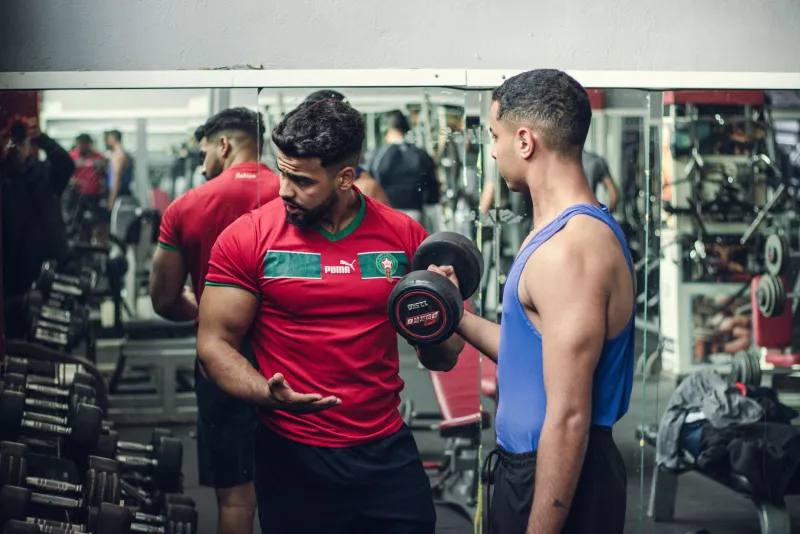
You show up on Tuesday morning, and the same guy is deadlifting in the corner. You nod. Two weeks later, you're spotting each other. A month in, you're swapping notes on programming. Six months down the road, that guy is texting you when you miss a session. That's not nothing. That's actually the whole thing.
Why Shared Struggle Creates Real Bonds
There's a psychological concept called "effort-based bonding" — the idea that people who work hard together form stronger social ties than those who simply socialize. It's why military units are so tight. It's why sports teams develop the kind of loyalty that lasts decades.
Strength training creates the same conditions at a smaller scale. When you and another guy are grinding through a tough squat session, both fighting the weight, both exhausted, something real happens between you. It doesn't require vulnerability in the way that word usually gets thrown around. It doesn't require a deep conversation about your feelings. It just requires showing up and doing hard things side by side.
For men who've been conditioned to keep it together and stay quiet, that kind of connection is a lifeline. It builds trust without demanding emotional exposure upfront. And once that trust is there, the conversations that do happen — about stress, about family, about the stuff that keeps you up at night — feel natural instead of forced.
The Accountability Partner Effect
One of the most underrated tools in the gym is the training partner. Not a personal trainer, not an app, not a fitness influencer — just another dude who's committed to showing up when you are.
Research consistently shows that social accountability dramatically increases exercise adherence. But the benefits go well beyond just showing up more often. Having a regular training partner means someone notices when you're off. When you're quieter than usual. When something's clearly wrong even if you haven't said a word.
That kind of low-key check-in is something a lot of men don't get anywhere else in their lives. It's not therapy. It doesn't need to be. It's just someone who sees you regularly and gives enough of a damn to ask if you're good.
For men dealing with depression or anxiety — conditions that affect tens of millions of American men and often go untreated — that consistency and human presence can be genuinely life-saving. Exercise itself is one of the most well-documented interventions for depression, with multiple studies showing it rivals antidepressants in moderate cases. Combine that with social connection and a sense of purpose, and the gym starts looking less like a place to get bigger and more like a place to stay sane.
Gym Culture Isn't Perfect, But It's Honest
Let's not romanticize it too much. Gym culture has its share of ego, bad advice, and the occasional guy who takes up three benches at once. It's not a utopia.
But there's something refreshing about its honesty. The weight doesn't care about your job title. It doesn't care what you drive. You either lifted it or you didn't, and everybody in the room knows it. That kind of meritocracy strips away a lot of the social performance that makes other environments exhausting.
In a gym, you can be a beginner without shame — because everyone started somewhere, and most experienced lifters remember that clearly. You can fail a rep in front of people and have someone walk over not to laugh, but to help you figure out why. That's a culture of honest feedback and genuine investment in each other's progress.
For men who've spent years performing competence and certainty in every other area of life, that honesty is a relief.
Getting Off the Couch and Into the Community
If you've been grinding solo — home gym in the garage, earbuds in, door closed — this isn't a knock on your setup. But if you're also feeling disconnected, isolated, or just a little flat, it might be worth asking whether your training environment is part of the equation.
Finding a good gym isn't just about the equipment. It's about finding a place where the culture fits. A spot where people are serious but not toxic, competitive but not cutthroat. A lot of local gyms — not the big-box chains — have that in spades. CrossFit boxes, powerlifting gyms, even well-run community recreation centers can have it.
Show up consistently. Learn people's names. Offer a spot. Ask questions. Be the person who notices when someone's been gone a while.
You don't have to make a big production out of it. Just show up and be present. The connections will follow.
Because here's the truth: the iron paradise isn't just about building a better body. It never really was. It's about building something more durable than muscle — the kind of bonds that hold when life gets heavy.