The Anabolic Window Is a Lie (And Here's What Actually Builds Muscle)
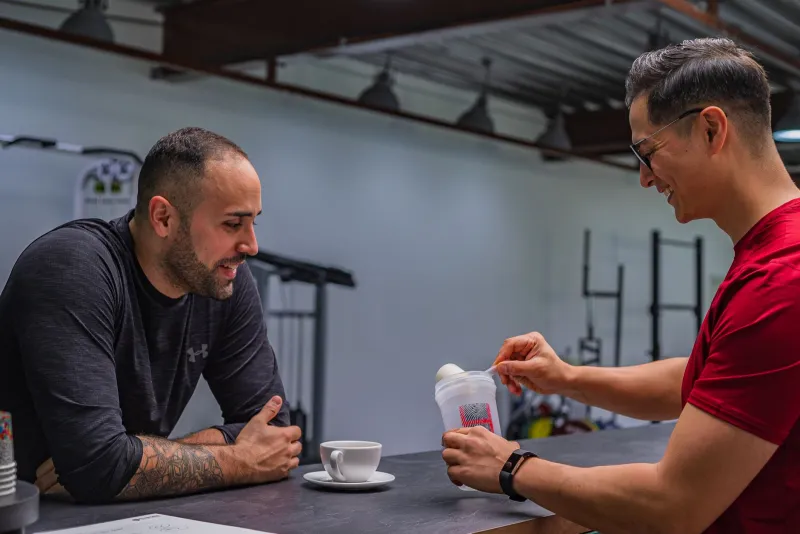
Picture this: you finish your last set, rack the bar, and immediately start speed-walking to your gym bag because the clock is ticking. You've got 30 minutes—maybe 45 if you're generous—to get protein into your system before the mythical "anabolic window" slams shut and you've basically wasted your workout. Sound familiar?
That scenario has been gospel in gym culture for the better part of two decades. It's also largely fiction—a story that's been enormously profitable for supplement companies and enormously confusing for guys who are just trying to build muscle without a PhD in sports nutrition.
Let's cut through it.
Where the Anabolic Window Myth Came From
The concept of a narrow post-workout nutrition window has legitimate roots in real science. Early research on muscle protein synthesis showed that resistance training creates a period of elevated anabolic sensitivity—your muscles become more receptive to amino acids after a training session. That part is true.
The leap from "elevated sensitivity" to "you have 30 minutes or you're done" is where things went sideways. That distortion was amplified by a supplement industry with a very clear financial incentive: if you believe timing is everything, you'll buy the pre-mixed shake, the fast-digesting whey isolate, and the intra-workout amino acid drink. The urgency sells product. The science, read carefully, tells a more nuanced story.
A landmark meta-analysis published in the Journal of the International Society of Sports Nutrition examined 23 studies on protein timing and muscle hypertrophy. The researchers found that when total daily protein intake was accounted for, the timing of protein consumption around workouts had minimal independent effect on muscle growth. The window, it turns out, is less of a 30-minute slot and more of a several-hour span—and for guys who eat a solid meal two to three hours before training, the window may extend even further.
What Muscle Protein Synthesis Actually Looks Like
Understanding what's really happening physiologically helps cut through the noise.
After you train, your muscles enter an elevated state of muscle protein synthesis (MPS)—the biological process of building new muscle tissue. This elevation doesn't spike for 30 minutes and then crash. Research shows MPS remains elevated for 24 to 48 hours post-training in trained individuals, with the most significant elevation occurring in the first few hours. The idea that you have a narrow window is based on studies conducted in fasted subjects—people who hadn't eaten before training. For a guy who ate a chicken breast and rice two hours before his workout, the situation looks completely different.
Your pre-workout meal is still circulating. Amino acids are still available. The so-called window opened before you even touched a barbell.
The Number That Actually Matters
Here's the unsexy truth that the supplement industry doesn't want to lead with: total daily protein intake is the single most important nutritional variable for muscle building. Not timing. Not the speed of digestion. Not whether your whey is hydrolyzed or not.
The current evidence-based recommendation for strength-training men sits at roughly 0.7 to 1 gram of protein per pound of bodyweight per day. For a 185-pound guy, that's 130 to 185 grams of protein spread across the day. If you're hitting that number consistently—from real food sources plus whatever supplementation makes sense for your lifestyle—you're doing the heavy lifting that actually matters.
A 2018 systematic review published in the British Journal of Sports Medicine analyzed data from 49 studies and over 1,800 participants. The conclusion: protein supplementation significantly increased muscle mass and strength gains from resistance training, but the effect plateaued at around 1.6 grams per kilogram of bodyweight per day (roughly 0.73 grams per pound). More protein beyond that threshold showed diminishing returns. The timing of that protein? Not a statistically significant factor.
What Protein Distribution Does Matter
Here's a nuance worth keeping: while the mythical 30-minute window is overblown, how you distribute protein across the day does have some relevance.
Research suggests that muscle protein synthesis responds better to evenly distributed protein intake across three to five meals rather than front-loading or back-loading your intake. Consuming 40 to 50 grams of protein in a single sitting doesn't produce dramatically more MPS than 30 to 35 grams—there's a ceiling to how much your body can utilize efficiently at one time for muscle-building purposes. So eating 150 grams of protein in two massive meals is probably slightly less optimal than spreading it across four solid meals throughout the day.
This isn't about obsessing over the clock. It's about building eating habits that keep amino acid availability reasonably steady, which supports ongoing MPS across the full 24-to-48-hour recovery window.
The Practical Playbook
Forget the stopwatch. Here's what actually deserves your attention:
Hit your daily protein target. This is non-negotiable and non-negotiably more important than anything else on this list. Calculate your target, track it for a few weeks until you develop an intuitive sense for it, then stay consistent.
Eat a protein-containing meal within a few hours of training—on either side. Not because the window slams shut, but because it's a practical habit that keeps your nutrition on track. A meal two hours before training and a meal within two hours after covers you completely.
Prioritize whole food sources. Chicken, eggs, lean beef, Greek yogurt, cottage cheese, fish—these deliver protein alongside micronutrients, satiety, and dietary variety that a shake alone can't replicate. Use protein powder as a convenient supplement to a real food foundation, not as the foundation itself.
Don't skip the carbs. This isn't a protein-only conversation. Carbohydrates replenish muscle glycogen and support training performance. A post-workout meal with both protein and carbohydrates is a smart choice—not because of the anabolic window, but because you just burned fuel and your body needs to rebuild its reserves.
Sleep like it's your job. This one never makes the supplement label, but the majority of muscle protein synthesis happens during sleep. Seven to nine hours of quality sleep is a more powerful anabolic stimulus than any timing protocol you'll read about online.
Stop Chasing the Clock, Start Chasing Consistency
The strongest guys in any gym didn't build their physiques by sprinting to their gym bags with a pre-measured shake. They built them through years of consistent training, adequate protein intake, and smart recovery—none of which requires a stopwatch.
The anabolic window myth is a distraction from the fundamentals that actually work. And the strong chap knows that chasing the basics—relentlessly, without shortcuts—is the only strategy that's ever delivered lasting results.