Built Alone, Breaking Down: The Hidden Cost of Being the Strong, Silent Type
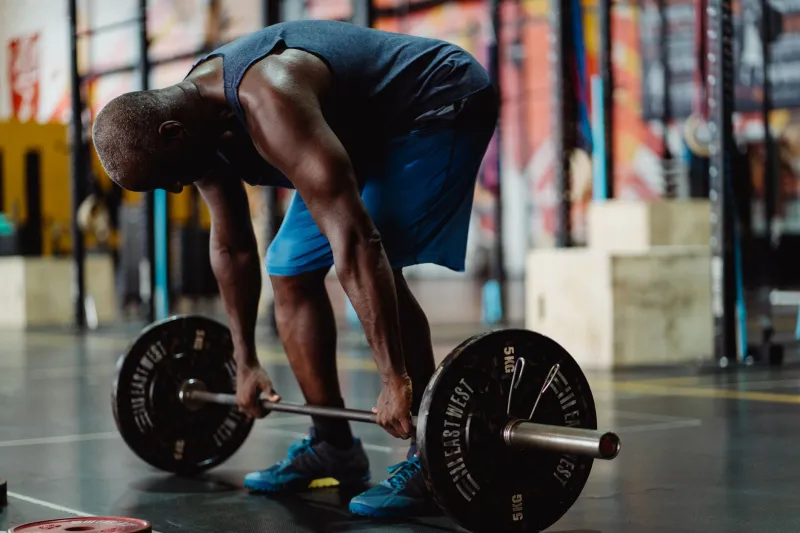
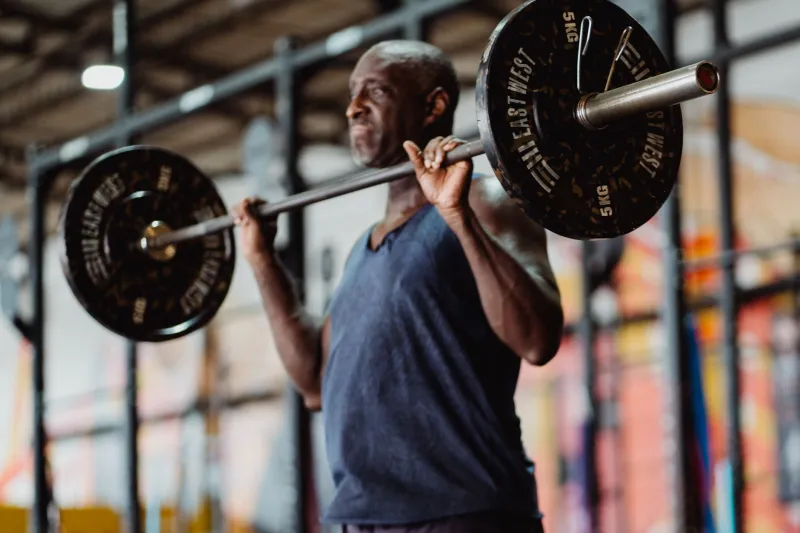
There's a specific kind of guy who's got his life dialed in on paper. He trains five days a week. His deadlift is climbing. His body fat is down. He's got a solid job, maybe a place of his own, and a routine that most men would envy.
He's also eating dinner alone most nights.
This isn't a rare story. It's practically an epidemic — and it's hitting men in their prime the hardest.
America has a loneliness problem, and men are bearing the brunt of it. According to a 2021 survey by the Survey Center on American Life, more than 15% of men reported having no close friends at all — a figure that has more than quintupled since 1990. Let that sink in for a second. One in six guys has zero close friendships. And the kicker? The men most likely to fall into this gap are the ones who look like they've got everything figured out.
The Paradox Nobody Talks About
Here's the cruel irony: the years when you're most physically capable — your 20s, 30s, and early 40s — are often the years when your social world quietly collapses around you.
You graduate. You move. You grind. You break up, or you couple up and suddenly your old crew drifts. Work takes over. The bar hangs seem immature. You tell yourself you don't need a squad — you've got the gym.
And the gym is something. Don't get it twisted. The nod from the guy who's been lifting next to you for two years, the occasional spot, the small talk between sets — that counts for something real. But most gym relationships stay surface level. You know the guy's name and his bench max, but not much else. That's not friendship. That's proximity.
Men aren't wired to just be near each other and call it connection. We're built for side-by-side activity with purpose — hunting, building, competing, solving. The gym gives us that structure, but only if we're intentional about what we build inside it.
What Loneliness Actually Does to a Strong Man
Loneliness isn't just a feelings problem. It's a performance problem. A health problem. A longevity problem.
Research from Brigham Young University found that social isolation carries health risks comparable to smoking 15 cigarettes a day. It elevates cortisol, disrupts sleep, tanks testosterone, and accelerates cognitive decline. The very gains you're chasing in the gym can be quietly undermined by the isolation surrounding them.
There's also the mental toll. Men are statistically less likely to seek help for depression or anxiety, and when your social network is thin, there's no early warning system. Nobody notices when you're struggling. Nobody checks in. You white-knuckle it alone because that's what strong guys do — and that story has a bad ending far too often.
Strength without community isn't a superpower. It's a pressure cooker.
Why Men Pull Back — And Why That's a Trap
A lot of guys pull back from friendship not because they don't want connection, but because the effort feels awkward or unmasculine. Reaching out to another guy to hang out, admitting you're lonely, being the one who texts first — it can feel weirdly vulnerable in a way that adding 20 pounds to the bar doesn't.
But here's the reframe: vulnerability isn't weakness. It's a skill. And just like your squat, it gets stronger with practice.
The men who build the deepest friendships aren't the ones who wait for connection to happen organically. They're the ones who treat relationship-building the same way they treat training — with consistency, intentionality, and a willingness to show up even when it's uncomfortable.
Using the Gym as a Gateway, Not a Destination
If you're already training regularly, you've got one of the best social platforms available to you — you're just probably not using it to its full potential.
The gym is an on-ramp, not the whole road.
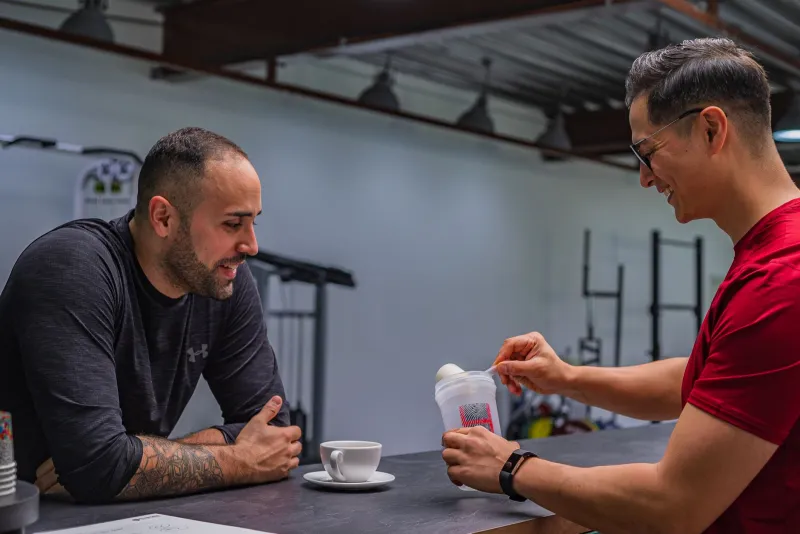
Start by going deeper with the guys you already know from training. Suggest grabbing food after a session. Join a powerlifting meet or a local CrossFit competition — not to win, but to share the experience. Sign up for a recreational sports league. Hiking groups, flag football, Brazilian jiu-jitsu, pickup basketball — these are all activity-based environments where men form bonds naturally, through doing, not just talking.
If you're in a new city or feel like you're starting from scratch, apps like Meetup and Bumble BFF (yes, guys use it) exist specifically for this. There's no shame in the tools. The only shame is in staying stuck.
What Real Brotherhood Actually Looks Like
Real male friendship isn't about emotional processing sessions or vulnerability circles — though those have their place. It's mostly about showing up. Consistently. Over time.
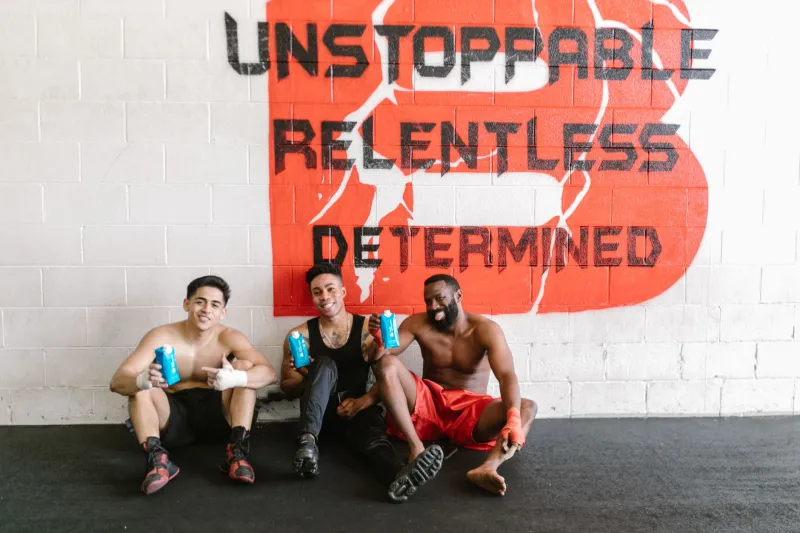
It's the friend who calls you out when your form is garbage and your mindset is worse. It's the guy who texts you after a tough week not because he has anything specific to say, but just to check in. It's the training partner who pushes you past what you'd do alone.
That kind of friendship doesn't happen overnight, and it doesn't happen passively. You have to invest in it the same way you invest in your training — with reps, with patience, and with the understanding that results take time.
The research backs this up too. A Harvard study tracking men over 80 years found that the quality of relationships was the single greatest predictor of health, happiness, and longevity — more than wealth, fame, or physical fitness. The strongest men weren't just the ones who lifted the most. They were the ones who had people in their corner.
The Fix Starts With You
You can't out-train loneliness. You can't supplement your way out of it. No amount of protein or progressive overload addresses the gap that comes from not having people who genuinely know you.
But here's what's in your control: you can decide, starting today, to be the guy who reaches out. Who says yes to the invite. Who suggests the post-workout meal. Who shows up to the thing even when it's easier to stay home.
Strong Chap isn't just about the body you build — it's about the life you build around it. And the strongest version of you isn't the one training alone in silence. It's the one who's built something worth sharing.
So make the call. Send the text. Walk up and introduce yourself.
The bar will always be there. The window to build something real with the people around you? That one closes faster than you think.