When Proving Yourself Becomes the Enemy of Building Yourself
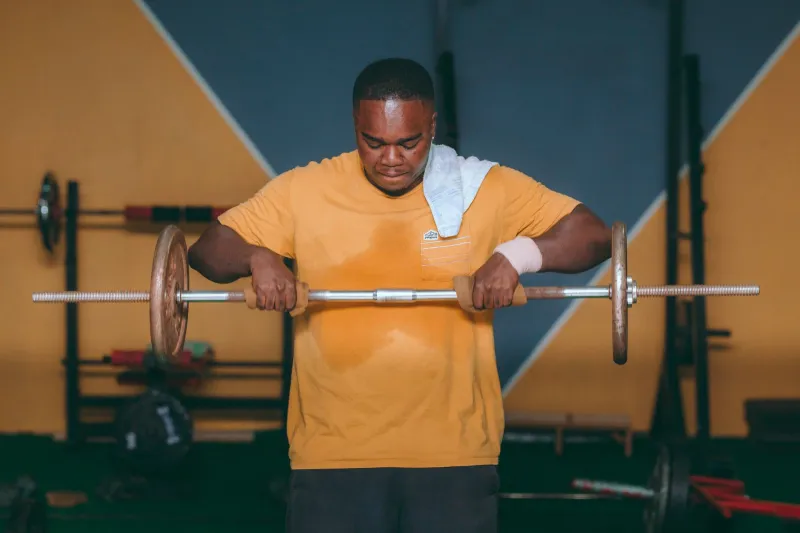
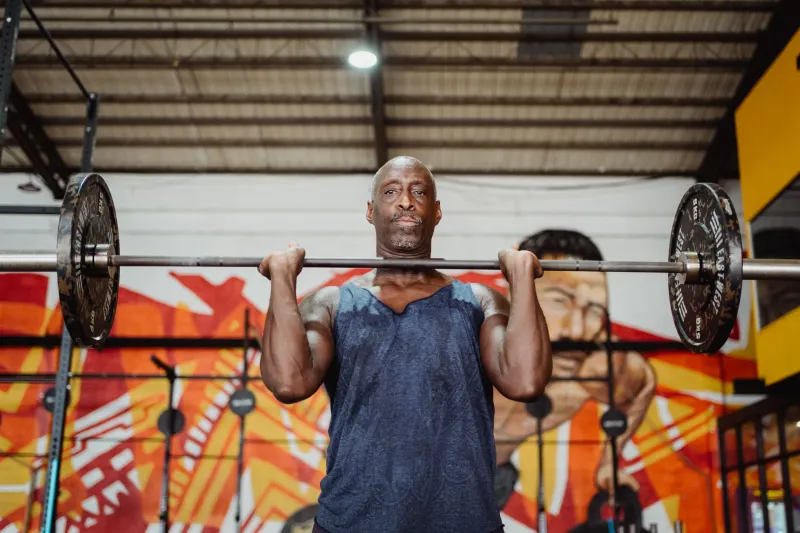
You know the feeling. You walk into the gym and someone's loading the bar heavier than you. Or you're mid-set and a buddy walks over. Or it's Monday and the guy next to you is benching what you should be benching. Something shifts. Your jaw tightens. You add a plate you weren't planning to add. You go harder, faster, heavier — not because the program called for it, but because something primal in you needed to answer a question nobody actually asked.
That feeling? It's not drive. It's noise. And for a lot of guys, it's the single biggest thing standing between them and real, lasting strength.
The Performance Trap Nobody Talks About
Competitive drive is one of the most useful things a man can have. In the right context — a sport, a business, a race — it's rocket fuel. But in the weight room, where progress is measured in months and years rather than scoreboards and final whistles, that same drive can quietly become a performance penalty.
Research on what psychologists call ego orientation in athletic training paints a pretty clear picture. Athletes and gym-goers who train primarily to outperform others — rather than to improve their own benchmarks — tend to experience higher rates of injury, greater training inconsistency, and ironically, worse long-term performance outcomes. The drive to look strong starts overriding the discipline required to become strong.
A 2019 study published in the Journal of Sport and Exercise Psychology found that male athletes with high ego-oriented motivation were significantly more likely to skip deload weeks, ignore programming cues, and push through pain signals — all behaviors that feel like toughness in the moment but functionally shred long-term progress. The men who trained with what researchers called task orientation — focused on personal improvement over external comparison — outperformed their ego-driven counterparts across nearly every measurable metric over a 12-month period.
That's not a small difference. That's a year of compounding gains versus a year of spinning your wheels.
Why Male Psychology Makes This Worse
Let's be straight about something: this isn't a character flaw. It's wiring. Male competitive psychology is deeply tied to status signaling, and the gym is one of the most primal status arenas around. Strength is visible. It's measurable. It invites comparison in a way that, say, improving your sleep quality or nailing your nutrition just doesn't.
From an evolutionary standpoint, that makes complete sense. Demonstrating physical dominance had real consequences for thousands of years. But here's the problem — your nervous system doesn't know the difference between a legitimate threat to your status and some random dude pulling 405 at your local Planet Fitness. It fires the same way. And when that stress response gets tangled up in your training, you stop making decisions based on what your body actually needs and start making them based on what your ego demands.
The result is a pattern that sports psychologists call self-handicapping through overreach — where the desperate attempt to prove capability actually produces the failure it was trying to prevent. You load too heavy, your form breaks down, you tweak something, you're out for three weeks. Or you go so hard chasing a PR that you crater your recovery, sleep tanks, cortisol spikes, and the testosterone you've been working to build takes a hit. Trying harder made you weaker. The penalty for proving yourself was paid in progress.
What Purpose-Driven Training Actually Looks Like
Shifting from ego-driven to purpose-driven training isn't about going soft. It's about getting smarter with the same intensity — channeling that competitive fire into something it can actually fuel.
Train against your log, not the guy next to you. Your training journal is the only scoreboard that matters. If you hit 225 for five reps last week and you're hitting 230 for five reps this week, you're winning — full stop. It doesn't matter what the guy three platforms down is lifting. His program, his history, his body composition, his sleep last night — none of it has anything to do with your bar.
Get comfortable with strategic restraint. This one stings for a lot of guys, but hear it out. Leaving a rep or two in the tank on your working sets — what coaches call submaximal training — is not weakness. It's how elite powerlifters and strength coaches structure the majority of their training volume. Grinding to absolute failure every session isn't a sign of dedication; it's a sign that you don't trust the process enough to play the long game.
Redefine what a good session looks like. If your definition of a great workout is one where you went as hard as humanly possible, you're going to be constantly chasing an unsustainable ceiling. A great session is one where you executed with precision, moved well, hit your numbers, and walked out ready to train again in 48 hours. That's the session that builds something real.
Audit your triggers. Pay attention to the moments when your training decisions shift from planned to reactive. Is it when someone's watching? When you're behind on a lift you expected to hit by now? When you had a rough day and the gym becomes the one place you feel in control? These triggers aren't weaknesses to be ashamed of — they're data points. Knowing them means you can catch yourself before the ego tax gets collected.
The Long Game Is the Only Game
Here's the cold truth about strength: it doesn't care how hard you tried. It only cares what you consistently did over time. The guy who trains with purpose and patience for five years will bury the guy who trains with ego and intensity for two years before burning out, getting hurt, or losing interest.
The strongest men in any gym — the ones who've been there for years, who move weight that makes you do a double-take — they almost never look like they're trying to prove anything. They're methodical. They rest when they need to. They're not performing for anyone. They show up, do the work, and leave. That's not apathy. That's mastery.
The strength penalty is real. But it's optional. You can keep paying it every time you let someone else's performance dictate your choices — or you can cash in on something more valuable: the compound interest of training with your eyes on your own paper, your hands on your own bar, and your head in the game that actually matters.
Building yourself is the whole point. Proving yourself is just a distraction.